

Neles Omega AM series angle valves are control valves designed for noise and cavitation control in high pressure-drop applications. Available in nominal sizes up to DN 25-1200 and ASME 150-2500 pressure classes, this valve series features Omega multistage stacked-disc trim and offers ISO 15848 low-emission and SIL 3 safety integrity certifications. It is suitable for cavitation control in high pressure-drop liquid process lines and noise control in high pressure-drop gas and steam applications, delivering stable and precise flow control.
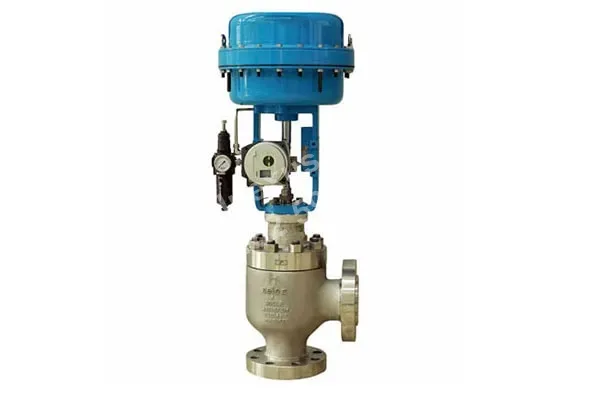
Neles Omega angle valve, AM Series
Neles
Neles Omega AM Series Angle Valves: Noise and Cavitation Control for High Pressure Drops
Angle valves for high pressure-drop applications, supporting multistage stacked-disc valve trim
- Category
- Globe Valves
- Nominal Size Range
- DN 25 - 1200 / 1" - 48"
- Pressure Class
- ASME 150 – 2500 / PN10 – 320
Specifications
- Valve Design
- Angle body; unbalanced, top-guided; balanced, cage-guided
- Nominal Size Range
- DN 25 - 1200 / 1" - 48"
- Pressure Class
- ASME 150 – 2500 / PN10 – 320
- Operating Temperature Range
- -196 °C … +593 °C
- Shutoff Class
- ANSI/FCI 70-2 Class IV / V (metal seat), Class V (balanced soft seat), Class VI (unbalanced soft seat)
- End Connection Type
- Flanged ends, welded ends
- Trim Guiding Design
- Top-guided, heavy-duty cage-guided
- Trim Technology
- Omega multistage stacked-disc trim
- Noise and Cavitation Control
- For noise or cavitation control in high pressure-drop applications
- Low-Emission Standard
- ISO 15848
- Safety Integrity Level
- SIL 3
- Material Options
- NACE material options available
- Packing Options
- Bellows seal
- Actuator Type
- Diaphragm or piston
Application scenarios
High Pressure-Drop Cavitation Control
Suitable for high pressure-drop throttling applications in liquid process lines. Omega multistage stacked-disc trim stages the pressure drop to control the cavitation risk caused by high pressure drops, while actuators and valve controllers enable precise flow control.
High Pressure-Drop Noise Control
Suitable for high pressure-drop control applications involving gas, steam, or other process media. Omega multistage stacked-disc trim, combined with top-guided or heavy-duty cage-guided construction, reduces noise generated by high pressure-drop throttling and supports stable flow control.
Selection points
Omega Multistage Stacked-Disc Trim
Features Omega multistage stacked-disc trim for noise or cavitation control in high pressure-drop applications.
Balanced and Unbalanced Designs with Multiple Shutoff Configurations
Available with unbalanced top-guided and balanced cage-guided designs, with metal-seat, balanced soft-seat, and unbalanced soft-seat shutoff configurations corresponding to ANSI/FCI 70-2 Class IV, V, or VI shutoff ratings.
Maintenance Design Without Removing the Valve from the Line
The valve does not need to be removed from the line when replacing components, making it suitable for installations requiring reduced maintenance effort.
Low-Emission and Bellows Seal Configuration
Optional bellows seal configuration complies with ISO 15848 low-emission requirements.
Wide Pressure and Temperature Coverage
Nominal sizes range from DN 25 to 1200, with pressure classes up to ASME 2500 or PN320 and an operating temperature range from -196 °C to +593 °C.
Installation notes
Verify flow direction and angle-piping arrangement against the valve body markings
This valve uses an angle-style body. During installation, connect the two flow ports correctly according to the actual flow-direction markings on the valve body and the site piping arrangement to ensure proper noise or cavitation control by the Omega multistage stacked-disc valve trim under high-pressure-drop conditions.
FAQ
How do Neles Omega AM Series angle valves reduce noise and cavitation under high-pressure-drop conditions?
The AM Series can use Omega multistage stacked-disc valve trim technology to distribute the pressure drop across multiple stages, reducing the risk of noise and cavitation generated during high-pressure-drop throttling. Different trim capacities, flow characteristics, and numbers of stages can be selected according to the operating conditions. The specific configuration must be confirmed based on the actual model and application requirements.
What severe process conditions are suitable for AM Series angle valves?
The series is suitable for high-pressure-drop applications, erosive media, and services requiring noise or cavitation control. The angle-body design is particularly suitable for angle-piping installations. Optional materials, flanged-end or welded-end bodies, bellows seals, NACE materials, and special cleaning configurations are available for applications involving oxygen, cryogenic temperatures, and other demanding conditions.
How should valve trim and leakage class be selected for Neles Omega AM Series valves?
Selection should consider line size, pressure class, process temperature, pressure drop, flow-control requirements, leakage class, and media characteristics. The series is available with top-guided or heavy-duty cage-guided valve trim, with multiple capacity, flow-characteristic, and stage options. Metal seats can achieve ANSI/FCI 70-2 Class IV or V, unbalanced soft seats can achieve Class VI, and balanced soft seats can achieve Class V. The specific configuration must be confirmed based on the actual model and application requirements.
What pressure, temperature, and size ranges are covered by AM Series angle valves?
The AM Series covers sizes from DN 25 to DN 1200 (1 inch to 48 inches), pressure classes from ASME 150 to 2500 and PN10 to PN320, and temperatures from -196 °C to +593 °C. The actual usable range must be confirmed based on the body, valve trim, sealing, and material configuration.
Do Neles Omega AM Series angle valves need to be removed from the pipeline for maintenance?
The series uses a top-entry design with quickly replaceable valve trim, so the valve does not need to be removed from the pipeline when components are replaced. Its one-piece body reduces potential leakage paths. Standard configurations can be paired with diaphragm or piston actuators and valve controllers to provide precise flow control and online performance monitoring.