

Neles NE700/NP700 valve positioners are available in electro-pneumatic and pneumatic versions for actuators on rotary valves or linear control valves. The series accepts 4–20 mA or 0.2–1 bar input signals and provides direct-acting and reverse-acting modes. With low moving mass and rigid mounting, the positioners maintain positioning repeatability and fast response at control valve installation points subject to mechanical vibration. The products are suitable for valve position control and control valve loops in high-temperature environments.
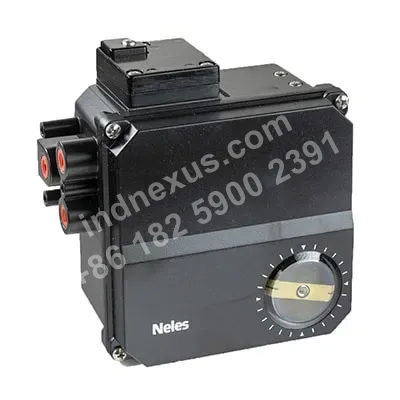
Neles NE700/NP700 positioner
Neles
Neles NE700/NP700 Valve Positioners
Positioners for rotary valves and linear control valves, supporting 4–20 mA input
- Category
- Valve Controllers
- Pneumatic input pressure
- 0.2 - 1 bar
- Operating temperature range
- Electro-pneumatic positioner: -25 to +120 °C / -15 to +248 °F; pneumatic positioner: -40 to +90 °C / -40 to +194 °F
Specifications
- Positioner type
- Electro-pneumatic positioner; pneumatic positioner
- Input signal
- 4 - 20 mA
- Pneumatic input pressure
- 0.2 - 1 bar
- Operating temperature range
- Electro-pneumatic positioner: -25 to +120 °C / -15 to +248 °F; pneumatic positioner: -40 to +90 °C / -40 to +194 °F
- Ingress protection rating
- IP 54 enclosure
- Compatible actuator type
- Rotary valve or linear control valve actuator
- Action mode
- Direct-acting or reverse-acting
Application scenarios
Rotary Valve and Linear Control Valve Control Loops
NE700/NP700 positioners are suitable for rotary valve or linear control valve actuators. They support valve position control while providing fast response, stable operation, good repeatability, and positioning accuracy.
Valve Mounting Points Subject to Mechanical Vibration
NE700/NP700 positioners are suitable for control valve actuator mounting points subject to mechanical vibration. Their low moving mass and rigid mounting design help improve vibration resistance while maintaining stable operation and positioning repeatability.
Valves for 4-20 mA Control Systems
The NE700 electro-pneumatic positioner is suitable for control valve actuators receiving 4-20 mA input signals and positions the valve according to the control signal.
Control Valve Loops with 0.2-1 bar Pneumatic Signals
The NP700 pneumatic positioner is suitable for rotary valve or linear control valve actuators receiving 0.2-1 bar pneumatic input signals and provides valve position control.
Selection points
Electrical or Pneumatic Signal Input
NE electro-pneumatic positioners use 4 - 20 mA input signals, while NP pneumatic positioners use 0.2 - 1 bar pneumatic input pressure. Select the appropriate positioner according to the control system signal type.
Compatibility with Rotary and Linear Actuators
NE700/NP700 positioners are suitable for rotary valve or linear control valve actuators. Selection can be based on the actuator type.
Vibration-Resistant Design with Low Moving Mass and Rigid Mounting
The products feature a robust design with a reduced number of components. Combined with low moving mass and rigid mounting, this design provides excellent vibration resistance.
Models for Different Operating Temperature Ranges
NE electro-pneumatic positioners operate from -25 to +120 °C, while NP pneumatic positioners operate from -40 to +90 °C. Select the appropriate model according to the site temperature conditions.
Installation notes
Strictly observe operating temperature limits
During installation, confirm that the ambient temperature at the site complies with the requirements for the corresponding model. The operating temperature range of the electro-pneumatic positioner is -25 to +120 °C, while that of the pneumatic positioner is -40 to +90 °C.
Set the action direction correctly
During installation and commissioning, set the direct-acting or reverse-acting mode according to the control requirements to ensure that input signal changes correspond to the intended valve movement direction.
Maintain enclosure protection conditions
During installation, ensure that the site environment is compatible with the IP54 enclosure protection rating and prevent ingress of moisture and dust beyond the capabilities of this protection level.
FAQ
What types of control valve actuators are Neles NE700/NP700 positioners suitable for?
Neles NE700/NP700 positioners can be used with rotary valves and linear control valves and are intended for a range of control valve actuators and industrial applications. When selecting a configuration, confirm the actuator type, stroke arrangement, control signal and actual operating conditions.
What are the differences between NE700 and NP700 in terms of input signal and ambient temperature range?
NE700 is an electro-pneumatic positioner with a 4–20 mA input signal and an operating temperature range of -25 to +120 °C. NP700 is a pneumatic positioner with a 0.2–1 bar input signal and an operating temperature range of -40 to +90 °C. Both use an IP54 enclosure.
How do NE700/NP700 positioners achieve fast valve response?
The series uses pilot valves in multiple sizes, allowing the positioner capacity to be matched to the actuator stroke volume and helping shorten response time. For control loops with different actuator volume and movement speed requirements, the specific configuration must be confirmed based on the actual model and application conditions.
How much do changes in supply pressure or valve load affect the positioning performance of NE700/NP700?
The design of NE700/NP700 minimizes the impact of changes in supply pressure and valve load on positioner operation, helping maintain stable operation, repeatability and positioning accuracy. During actual use, ensure that the instrument air supply and valve actuator meet the system operating requirements.
Can NE700/NP700 be configured for direct-acting or reverse-acting operation?
Yes. NE700/NP700 can be configured for direct-acting or reverse-acting operation by adjusting the changeover element and feedback cam. During installation or modification, confirm the required setting based on the control system signal logic, actuator movement direction and valve failure action requirements, and complete calibration.