

The EBRO RSK is a wafer check valve designed to prevent backflow of media, suitable for DN 32-DN 400 pipelines and compatible with EN 1092 PN 10/16 and ASME Class 150 flanges. The valve can be installed in any position and is available in aluminum, stainless steel, plastic and Hastelloy. The metal versions have a maximum operating pressure of 16 bar, making them suitable for pump discharge lines and chemical media transfer lines.
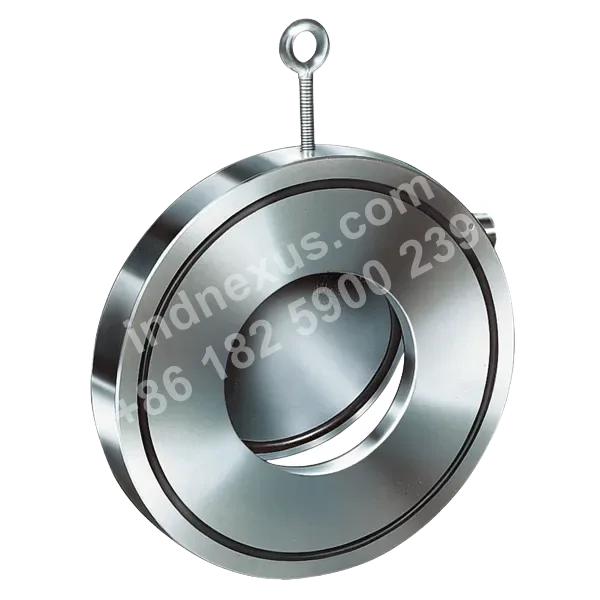
Product image of the RSK wafer check valve non-return valve for backflow prevention
EBRO
RSK Wafer Check Valve - Non-Return Valve for Backflow Prevention | EBRO
Product code: RSK
Wafer check valve that prevents backflow of media in pipelines, suitable for pump outlets and chemical transfer lines from DN 32 to DN 400.
- Category
- Check Valves
- Operating temperature range
- 0 °C to +200 °C, depending on seal and body material; NBR 90 °C, EPDM 120 °C, FPM 150 °C, PTFE 200 °C
- Maximum operating pressure
- Plastic versions max. 8 bar; metal versions max. 16 bar, depending on nominal size and body material
Specifications
- Nominal diameter
- DN 32 - DN 400
- Connection type
- Wafer type
- Connecting flanges
- EN 1092 PN 10/16, ASME Class 150
- Face-to-face standard
- Factory standard
- Installation position
- Any position
- Sealing class
- EN 12266 Leakage Rate A: NBR, EPDM, FKM, PTFE; EN 12266 Leakage Rate G: metal seal; ISO 5208 Category 3; API 598 Table 5
- Operating temperature range
- 0 °C to +200 °C, depending on seal and body material; NBR 90 °C, EPDM 120 °C, FPM 150 °C, PTFE 200 °C
- Maximum operating pressure
- Plastic versions max. 8 bar; metal versions max. 16 bar, depending on nominal size and body material
- Body material
- Aluminum, 1.4301, 2.0975, PVC, PP, PVDF, nickel-plated steel, Hastelloy C4
- Disc material
- 1.4408, 1.4571, 2.0975, PVC, PP, PVDF, Hastelloy C4
Application scenarios
Backflow prevention at pump discharge lines
Used on the discharge pipelines of feed pumps, circulation pumps or other transfer pumps, installed between flanges with a wafer-type design. The short face-to-face length and installation in any position make it suitable for space-constrained pipeline layouts; spring-loaded versions can be used in pipelines with resonant flow conditions.
Unidirectional flow control in chemical transfer lines
Used for unidirectional flow control in chemical media transfer lines. Body and disc materials such as PVC, PP, PVDF or Hastelloy C4 are available, and FKM or PTFE seals can be configured; the specific materials and pressure conditions should be selected according to the medium and operating conditions.
FAQ
Which pipe sizes and flange connection standards are the EBRO RSK wafer check valves suitable for?
The RSK covers nominal diameters from DN 32 to DN 400, uses a wafer-type connection, and is compatible with EN 1092 PN 10/16 and ASME Class 150 flanges. During selection, verify the nominal pipe size, flange standard and actual pressure conditions.
Can the RSK wafer check valve be installed on vertical or any-direction pipelines?
Yes. The RSK is designed for installation in any position and features bracket holes for easy centering between the pipeline flanges. Installation should still be verified against the pipeline layout, flow direction and site conditions.
How should the seal type and leakage class of the RSK check valve be selected?
With NBR, EPDM, FKM or PTFE seals, the RSK complies with EN 12266 Leakage Rate A; with a metal seal, it complies with EN 12266 Leakage Rate G. ISO 5208 Category 3 and API 598 Table 5 sealing class requirements are also listed. The seal material should be selected according to the medium properties and operating temperature.
What are the temperature and pressure ranges of the RSK wafer check valve?
The operating temperature range of the RSK is 0 °C to +200 °C; the actual permitted temperature depends on the seal and body material: NBR up to 90 °C, EPDM up to 120 °C, FPM up to 150 °C, PTFE up to 200 °C. The maximum operating pressure is 8 bar for plastic versions and 16 bar for metal versions; the actual pressure capacity also depends on the nominal size and body material.
How should the RSK check valve be selected for vibrating or resonant flow conditions?
For resonant flow conditions, a spring-loaded version of the RSK can be selected. Spring-loaded options are available for all designs in the series and can be used to improve the disc closing characteristics. The RSK has a short face-to-face length, is sealed with O-rings, is easy to install and designed to be maintenance-free.